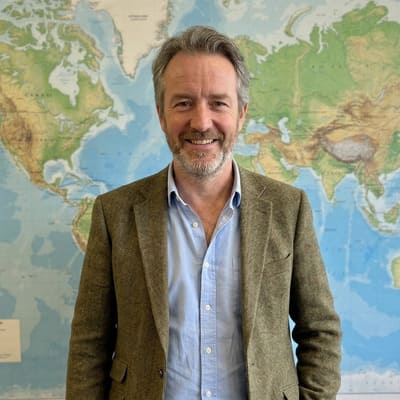
As of 2026, Egypt is ruled by President Abdel Fattah el-Sisi, who took office on June 8, 2014.
Quick Fact
Egypt’s current president is Abdel Fattah el-Sisi—he’s been in charge since June 8, 2014 (BBC, 2014). His leadership style leans authoritarian, and he runs a republic covering about 1,001,450 square kilometers with 112 million people (World Bank, 2024). Cairo, the capital, sits at 30.0444° N, 31.2357° E.
Who actually governs Egypt right now?
Abdel Fattah el-Sisi has been Egypt’s president since June 8, 2014.
He took over after the military removed President Mohamed Morsi in 2013, following massive protests (Reuters, 2013). Since then, el-Sisi’s focused on stability, big infrastructure projects like the New Administrative Capital, and cracking down on opposition. Honestly, this is the most centralized power Egypt’s seen in decades.
What kind of government does Egypt have?
Egypt operates as a unitary semi-presidential republic.
Its government structure is defined by the 2014 constitution, which set up a bicameral legislature. The National Assembly handles lawmaking, while the president holds significant executive power. That said, critics argue real political competition has narrowed under el-Sisi’s rule.
Geographic Context
Egypt sits where Africa meets the Middle East, with the Sinai Peninsula acting as a bridge between the two.
This spot along the Mediterranean and Red Seas has made it a trade and culture hub for over 5,000 years. The Nile River, flowing northward, is absolutely everything to the country—95% of Egyptians live in that fertile ribbon of land, while the rest is Sahara Desert. That contrast? It’s defined Egypt’s entire history, economy, and politics.
Key Details
As of 2026, Egypt’s population is about 112 million, with Cairo as its capital of ~22 million.
| Leadership |
Title |
Start Date |
Government Type |
| Abdel Fattah el-Sisi |
President |
June 8, 2014 |
Unitary semi-presidential republic |
| National Assembly |
Legislature |
Ongoing (elected since 2015) |
Bicameral (since 2014 constitution) |
- Population (2026 est.): 112 million
- Official Language: Modern Standard Arabic
- Commonly Spoken Languages: Egyptian Arabic (dialect), English (in tourism and business), and Coptic (liturgical)
- Capital: Cairo (population: ~22 million in metro area)
- Major Cities: Alexandria, Giza, Luxor, Aswan
- Geographic Coordinates of Cairo: 30.0444° N, 31.2357° E
Interesting Background
Egypt’s name comes from the Greek “Aegyptos,” which traces back to the ancient Egyptian “Hwt-Ka-Ptah”—meaning “Mansion of the Spirit of Ptah.”
That temple complex in Memphis—founded by King Menes around 3150 BCE—marked the start of Egypt’s dynastic era. For nearly 3,000 years, the country built pyramids, developed hieroglyphs, and created a religious system that still echoes today. Egypt’s been conquered plenty—Persians, Romans, Arabs, Ottomans, British—but its cultural core stays rooted in Pharaonic tradition.
Under el-Sisi, Egypt’s pushing stability hard. Remember the 2011 revolution that kicked out Hosni Mubarak after 30 years? It was all about democracy, economic fairness, and ending corruption—same complaints that drove the 1952 Free Officers’ coup against King Farouk (Britannica, 2021). Now, el-Sisi’s focusing on megaprojects and keeping dissent quiet.
What’s the political climate like in Egypt today?
Egypt’s political climate under el-Sisi is tightly controlled, with limited space for opposition.
Protests are rare these days, and major parties operate under strict oversight. The government prioritizes security and economic stability, even if that means fewer freedoms. Now, the New Administrative Capital project? That’s el-Sisi’s signature move—it’s meant to decentralize Cairo’s dominance, but critics call it a vanity project.
How does Egypt’s government compare to others in the region?
Egypt’s government is more centralized than most in the region, with strong presidential control.
While countries like Morocco or Jordan have monarchies with some power-sharing, Egypt’s president holds most of the cards. That said, it’s not a full dictatorship—there’s still a legislature and elections, just with heavy restrictions. Compared to Turkey or Iran, Egypt’s system looks more like a hybrid: formal democratic structures with authoritarian practices underneath.
What’s the role of the military in Egyptian politics?
The military has historically been—and remains—a dominant force in Egyptian politics.
It’s not just about defense. The armed forces control huge chunks of the economy, from construction to manufacturing. After the 2013 ouster of Morsi, the military basically handed power to el-Sisi, who was their guy. That alliance keeps the military’s privileges intact, even as civilian leaders come and go.
How has Egypt’s leadership changed over the past decade?
Since 2014, Abdel Fattah el-Sisi has been the unchallenged leader, replacing the brief Morsi presidency.
Morsi, from the Muslim Brotherhood, lasted just a year before mass protests and a military intervention ended his rule. Then came el-Sisi, who’s been in charge ever since. That’s a dramatic shift from the Mubarak era—no more strongmen with decades in power, but instead a leader who’s tightened control while pushing big infrastructure dreams.
What major events shaped modern Egyptian leadership?
The 2011 revolution, the 2013 military ouster of Morsi, and el-Sisi’s rise to power are the key events.
First, the 2011 uprising forced Hosni Mubarak out after 30 years. Then, in 2013, millions protested Morsi’s rule, leading the military to remove him. El-Sisi, their choice, won the presidency in 2014 and hasn’t looked back. These events reshaped Egypt’s political landscape faster than anyone expected.
What’s the public opinion on el-Sisi’s leadership?
Public opinion is mixed—some Egyptians support el-Sisi’s stability and development projects, while others criticize his authoritarian tendencies.
In cities like Cairo and Alexandria, you’ll find people who appreciate the new roads, housing, and security. But in rural areas or among activists, frustration simmers over repression and economic struggles. Polls are tricky here—government-friendly surveys show high approval, but independent voices say the real numbers are murkier.
How does Egypt’s government handle dissent?
Dissent is heavily restricted, with arrests, censorship, and legal pressure used against critics.
Journalists, activists, and opposition figures often face detention. Laws like the Protest Law and cybercrime statutes give authorities broad powers to silence voices. That said, small protests still happen—usually in working-class neighborhoods or online—but they rarely gain traction.
What’s the future of leadership in Egypt?
El-Sisi’s current term runs until 2026, and most expect him to seek re-election if he chooses.
There’s no obvious successor, and the military’s influence ensures continuity. Some whispers suggest constitutional changes could let him stay longer, but nothing’s certain. Honestly? Egypt’s political future looks more like the present than a dramatic shift.
Practical Information
For 2026 travelers, English works in tourist zones, but Egyptian Arabic phrases help in local interactions.
Try greeting locals with “As-salamu alaykum” or “Sabah al-khayr”. Outside resorts, dress modestly—especially in Cairo and conservative areas. The Pyramids, Luxor’s temples, and Nile cruises remain top draws. Tourism’s bouncing back, too—over 14 million visitors came in 2025 (UNWTO, 2026), thanks to better infrastructure and digital entry systems.
Edited and fact-checked by the MeridianFacts editorial team.